

Deciding how to approach the process of selling your e-commerce business can be overwhelming or even confusing if you don’t have the assistance of a knowledgeable website broker to guide you through. Inventory is no doubt required to run your business and you have probably established clear systems and processes to help you stay on top of all of that inventory.
It is frequently the case that you would include a normal level of inventory in the purchase price of your company when you decide to sell your e-commerce business. The primary purpose of this is to make a good faith effort to allow the business to sustain current revenues already being generated by the company.

This means that everything over this normal amount that you include in the purchase price has to be bought by the buyer in addition to the underlying business valuation. There are several different factors that must be incorporated in your consideration of your inventory cost, including:
When you think about how do you value your inventory, it’s important to look beyond just numbers on a spreadsheet. Inventory accounting directly influences your gross profit, your tax implications, and even how investors or buyers perceive your company’s financial statements. In short, the way you calculate inventory is a central part of how inventory is valued on a business valuation, and it has ripple effects on the final purchase price.
There are many different factors you can incorporate into the process of fine tuning and tweaking your business to prepare it for sale. The following factors can significantly enhance the value of your business beyond the inventory and current sales;
These considerations strengthen the buyer’s confidence. Even if your unsold inventory carries less weight, a strong operational foundation demonstrates that the business can scale and deliver consistent returns.

The main types of inventory can be broken down into four categories:
Understanding these categories is critical when determining how to value business inventory. For instance, WIP often requires adjustment for costs already incurred but not yet contributing to gross profit, while finished products must be aligned with market demand.

Companies can choose from the main four inventory valuation methods for retail business. When it comes to how to value a business with inventory, key decision makers within the business should deliberate the pros and cons of every approach.
First In, First Out (FIFO method)
The first sets of products a business sells are the oldest inventory items it acquired, valuing inventory respectively. This widely used process aligns closely with actual inventory costs.
Older inventory is usually less expensive since material prices and other costs rise over time. As a result, using FIFO achieves a lower cost of goods sold (COGS) and a higher gross income compared to other valuation methods.
However, FIFO has two notable drawbacks. It comes with tax implications, as the company will need to pay higher taxes. Furthermore, FIFO can produce financial statements that may mislead investors during high-inflation periods.
Last In, First Out (LIFO method)
The FIFO and LIFO methods are complete opposites. Retail businesses that use the LIFO approach sell the most recent inventory.
Using the LIFO method tends to be the least profitable as the cost of goods sold (COGS) is based on the most recent (and likely more expensive due to inflation) inventory. Businesses that adopt this approach, however, will have lower tax burdens.
Weighted Average Cost (WAC)
The Weighted Average Cost (WAC) method calculates inventory costs based on an average of all inventory costs. It’s particularly useful for businesses with identical inventory items, as it simplifies the process by avoiding the need to track individual goods available for sale separately when figuring out gross profit and tax implications.
To get the weighted average cost per item, you have to divide the total cost of goods by the total inventory items.

Specific Identification
The Specific Identification method records every item from purchase to sale. This method isn’t ideal for retail businesses with a large quantity of goods available for sale. Instead, it’s the recommended approach for dealers of ultra-expensive, unique items.
Specific Identification offers the most accurate record of actual inventory costs and profits, allowing the company to gauge the profitability of every single item.
For business owners this is one of the biggest questions: How do you value your inventory?
The way to make the best decision is to establish your priorities and how every approach aligns with your goals. The value of inventory for a small business would be significantly different from that used by larger companies with more complex systems. Small retailers may choose simpler methods like WAC or FIFO because they reduce the administrative burden, while larger companies might favor LIFO during inflationary times for its tax benefits.
What truly matters is to stick with one method consistently, as this is crucial for both your business and IRS compliance during each accounting period. Inconsistent application of inventory accounting rules can create red flags for auditors and buyers alike.

Businesses need to determine the frequency of recording inventory to have an overview of the stock levels of their products.
Annual Counting
This traditional method involves a full physical count of all inventory items once a year, which can be time-consuming and disruptive but provides a comprehensive snapshot of inventory levels.
Cycle Counting
This modern approach divides inventory into categories and counts different sections at various intervals throughout the year.
Perpetual Counting
This advanced method uses technology to continuously track and update inventory levels in real-time, but requires significant investment and maintenance.
Establishing the right frequency also ensures that inventory tracking supports accurate financial reporting, which is key when preparing to sell.
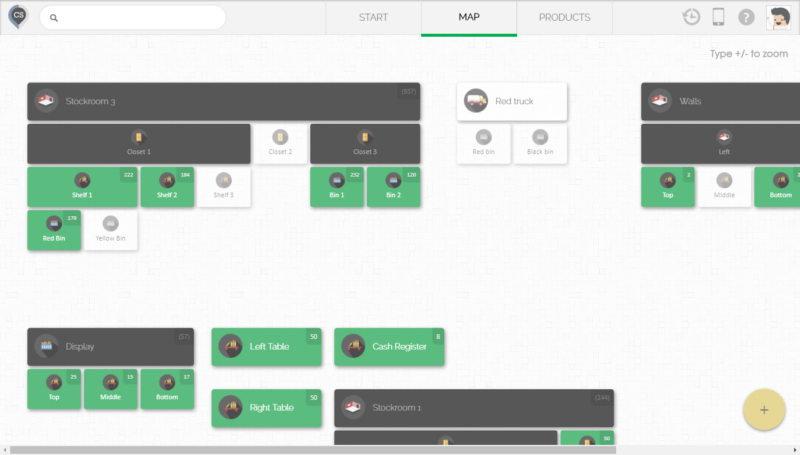
As the business expands, the problem of a business owner goes beyond deciding how to value business inventory. The countless items purchased will require a corresponding cost to each item to accurately calculate profits and tax liabilities. Tracking these finances with spreadsheets can quickly become overwhelming, time-consuming, and prone to errors.
Fortunately, leading financial management software can handle the most popular inventory valuation methods, automating the tracking and calculation of inventory costs. With inventory software solutions, you can achieve better accuracy, and your staff can focus on more valuable tasks.
Choose the Best Website Broker
When thinking about selling your business, partnering with an established e-commerce sales firm can help you to accomplish many of your sales goals. A website broker should be familiar with the common tactics used to arrive at multiples, how to list your company online for sale, and how to vet potential buyers against who should make the short list for consideration. There are a lot of different factors that go into listing your company for sale, but you want the peace of mind and the confidence that your business broker is handling these processes as effectively as possible.
When selling an e-commerce business, inventory valuation directly affects sale price, taxes, and buyer perception. Common methods include FIFO, LIFO, Weighted Average Cost, and Specific Identification, with consistency being key for compliance and credibility. Beyond inventory, factors like repeat customers, clean financials, strong traffic, reliable suppliers, and scalable systems increase overall business value. Using proper tracking methods, inventory software, and a knowledgeable website broker ensures accuracy, confidence, and a stronger final sale price.
Valuing inventory is not just about tallying stock; it’s about aligning accounting practices with your growth goals, tax strategy, and exit planning. Whether you rely on FIFO, LIFO, WAC, or specific identification, the consistency of application and clarity in reporting will directly influence how your business is perceived by buyers.
For small business owners, the key is to balance simplicity with accuracy. For larger e-commerce operations, deeper strategies, like cycle counting or perpetual tracking, provide the precision buyers demand. Above all, understanding how to value a business with inventory positions you to negotiate confidently, avoid pitfalls, and maximize your final sale price.
Document your chosen method, apply it consistently across every accounting period, and leverage software to eliminate errors. When paired with the guidance of an experienced website broker, your inventory valuation becomes not just a compliance task but a strategic advantage for selling your business.
Unsold inventory can lower perceived value unless accounted for properly. Businesses often apply a cost-to-retail ratio or negotiate discounts for obsolete stock to ensure fairness during valuation.
Yes, but changes must be justified and reported for tax compliance. Switching between FIFO and LIFO or WAC midstream may trigger questions from buyers and auditors, as consistency across each accounting period is expected.
Different methods lead to different reported costs of goods sold and gross profit. FIFO may result in higher taxable income, while LIFO may reduce taxes in inflationary periods. Buyers will consider how these methods shape your business’s financial statements.


Thank you for your interest. We're happy to help in your acquisition search.
Please help us by providing an honest review. We focus on those that take the time to review our company.
Leave a Review
